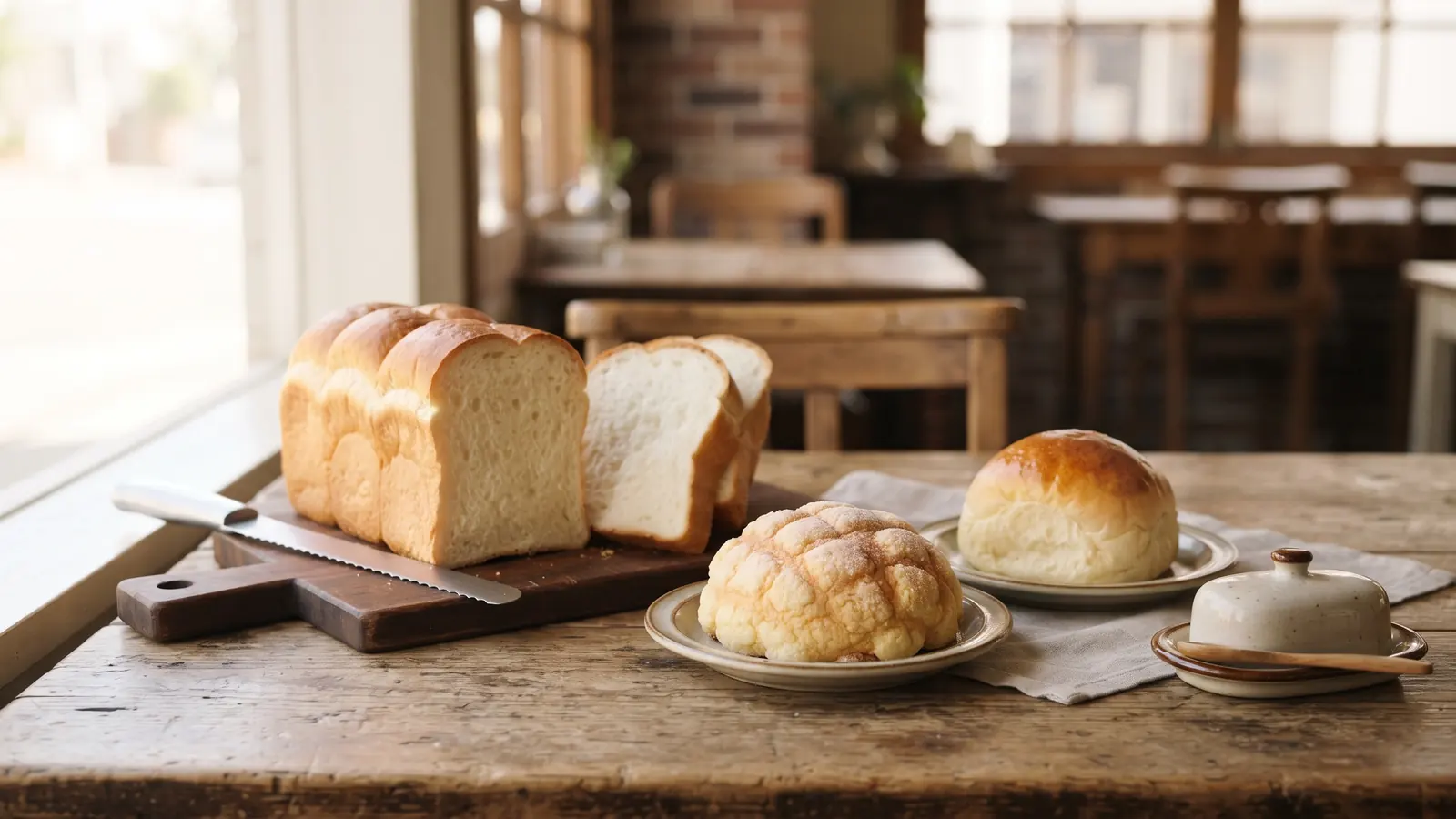
Short answer
Shokupan is a soft, square-sided Japanese milk bread made from an enriched dough of flour, milk, butter, sugar and yeast. It has a fine, springy crumb and a thin crust, and it is eaten toasted or as thick slices with butter and jam.
Shokupan is a Japanese milk bread: a soft, springy loaf made from flour, milk, butter, sugar and yeast, baked in a tin so the crumb stays fine and the crust stays thin. The name means “eating bread” in Japanese, and the loaf is usually sliced thick, toasted and eaten with butter or jam.
What is shokupan?
Shokupan (食パン) is the standard sandwich-style loaf of Japanese bakeries, and it is known for a tender, slightly sweet crumb that pulls apart in soft layers. The word combines shoku, meaning eating or meal, and pan, which came into Japanese from the Portuguese word for bread.
Western-style bread arrived in Japan through traders centuries ago and spread widely in the 1800s. Over time Japanese bakers refined a loaf that is richer and softer than the lean white bread of Europe. The result is shokupan, sold plain, toasted at cafes, or cut into sandwich bread called sando.
What makes shokupan so soft?
Shokupan is soft because its dough is enriched with milk, butter and a little sugar, and because many bakers cook part of the flour into a paste before mixing. The fat shortens the gluten strands, so the crumb is tender instead of chewy.
Three things do most of the work:
- Enrichment. Milk and butter coat the flour proteins, giving a fine crumb and a golden, thin crust.
- A cooked flour paste. The tangzhong or yudane method holds extra water in the dough, which keeps the loaf moist for longer.
- Long kneading. The dough is worked until it can be stretched into a thin, translucent sheet, which builds a strong but fine structure.
What is the difference between shokupan and regular white bread?
Shokupan differs from ordinary white sandwich bread mainly in richness and texture: it has more milk and butter, a softer and springier crumb, and often a faintly sweet flavour. Plain white bread is leaner and can taste more neutral.
| Feature | Shokupan | Typical white bread |
|---|---|---|
| Fat | Butter and milk | Often oil or little fat |
| Crumb | Fine, springy, pulls in layers | Even, firmer |
| Flavour | Mildly sweet, milky | Neutral |
| Crust | Thin and pale | Thicker, sometimes chewy |
| Common shape | Square (lidded tin) or domed | Domed or square |
The comparison is general. Individual loaves from different bakers vary, so these are typical tendencies, not rules.
Why is shokupan square?
Shokupan is square when it is baked in a lidded tin, usually called a pullman tin, which stops the dough rising past the sides and forces it into a block. The sealed lid gives sharp corners and an even, tight crumb that slices cleanly.
Bakers who leave the lid off get a rounded top, and Japanese bakeries sometimes call that style a mountain loaf. Both shapes count as shokupan, and the choice is mostly about slice shape. Square slices suit sandwiches, while domed slices tend to be wider and softer at the top.
What is the tangzhong method in shokupan?
Tangzhong is a cooked paste of flour and water or milk that is added to the dough, and it lets the bread hold more moisture so it stays soft. The method is widely linked to Asian bakeries, and Japanese bakers use a similar paste called yudane, made by pouring boiling water over flour.
The basic idea is simple. A small amount of flour is heated with liquid until it thickens, cooled, and then kneaded into the main dough. The gelatinised starch binds water that would otherwise bake out. Anyone who wants the full method can read the guide on tangzhong in the same section of this site once it is published.
How do you eat shokupan?
The classic way to eat shokupan is a thick slice, toasted until the edges are golden, with butter and perhaps jam or sweetened red bean paste. The soft middle stays tender while the surface turns crisp.
Common ways to serve it:
- Thick toast with butter and a spoonful of preserves.
- Sando, a sandwich with the crusts trimmed, filled with egg salad or fruit and cream.
- French toast, because the sturdy but soft crumb soaks up custard well.
- Plain, torn into pieces, since a good loaf is pleasant without a topping.
Slices cut about two to three centimetres thick toast best. Thin slices dry out before they brown.
How do you store shokupan?
Shokupan keeps best in a sealed bag at room temperature for two to three days, or sliced and frozen for longer. The fridge speeds up staling, so it is better to freeze than to chill the loaf.
Slice the loaf before freezing so you can take out one piece at a time. Toast slices straight from frozen, adding a minute to the usual time. Day-old shokupan that has gone slightly dry is still good for toast or french toast.
What does Dua Bakehouse serve as shokupan?
Dua Bakehouse in Collingwood, Melbourne, lists shokupan among its breads, and press coverage describes it as soft Japanese milk bread that is also served as thick slices with butter and preserves. The bread is baked on site, according to Concrete Playground, and shokupan is one of the named items in Broadsheet’s coverage of the bakehouse. The full list of items read for this guide is on the menu page.
No price for the shokupan was published in any source, and the daily bakes change, so it is worth calling the cafe or checking its Instagram page before travelling for a particular loaf. The hours and location page lists the opening times found. This guide is independent and does not take orders.
Is shokupan only a Japanese bread?
Shokupan is Japanese in name and style, but it belongs to a wider family of soft, enriched milk breads found across East and Southeast Asia. Hong Kong bakeries make a similar soft loaf, and the Philippines has its own soft rolls called pandesal.
The techniques overlap, especially the use of milk, sugar and a cooked flour paste, so a Japanese loaf and a Hong Kong loaf can taste close. Where the shapes and sweetness differ, the local tradition usually explains why. Anyone curious about the Filipino relative can see how Dua Bakehouse uses pandesal with ube cream, which is another of its named breads.
Common questions
Is shokupan the same as Hokkaido milk bread?
They overlap. Hokkaido milk bread is a popular style of shokupan, often made with a tangzhong or yudane paste and milk. Many bakers use the names loosely for the same soft white loaf.
Why is shokupan square?
A lidded loaf tin, often called a pullman tin, stops the dough rising upward. The loaf fills the tin and bakes into a square block with a pale, thin crust and even slices.
Can you make shokupan without a lid on the tin?
Yes. An open tin gives a domed top, sometimes called a mountain loaf. The crumb is the same soft texture, only the shape and slice outline differ from the square version.
How long does shokupan stay soft?
Fresh shokupan is at its best on the day it is baked and stays pleasant for two to three days in a sealed bag. After that, toasting brings it back.
Does shokupan contain egg?
Recipes vary. Many classic versions use only flour, milk, butter, sugar, salt and yeast, while others add an egg. Check with the baker if you need to avoid egg or dairy.
Everything practical is on the home page: Dua Bakehouse hours, menu and directions.
This article is general information from an independent guide, not from Dua Bakehouse itself. For the store’s current details see hours and location.