Short answer
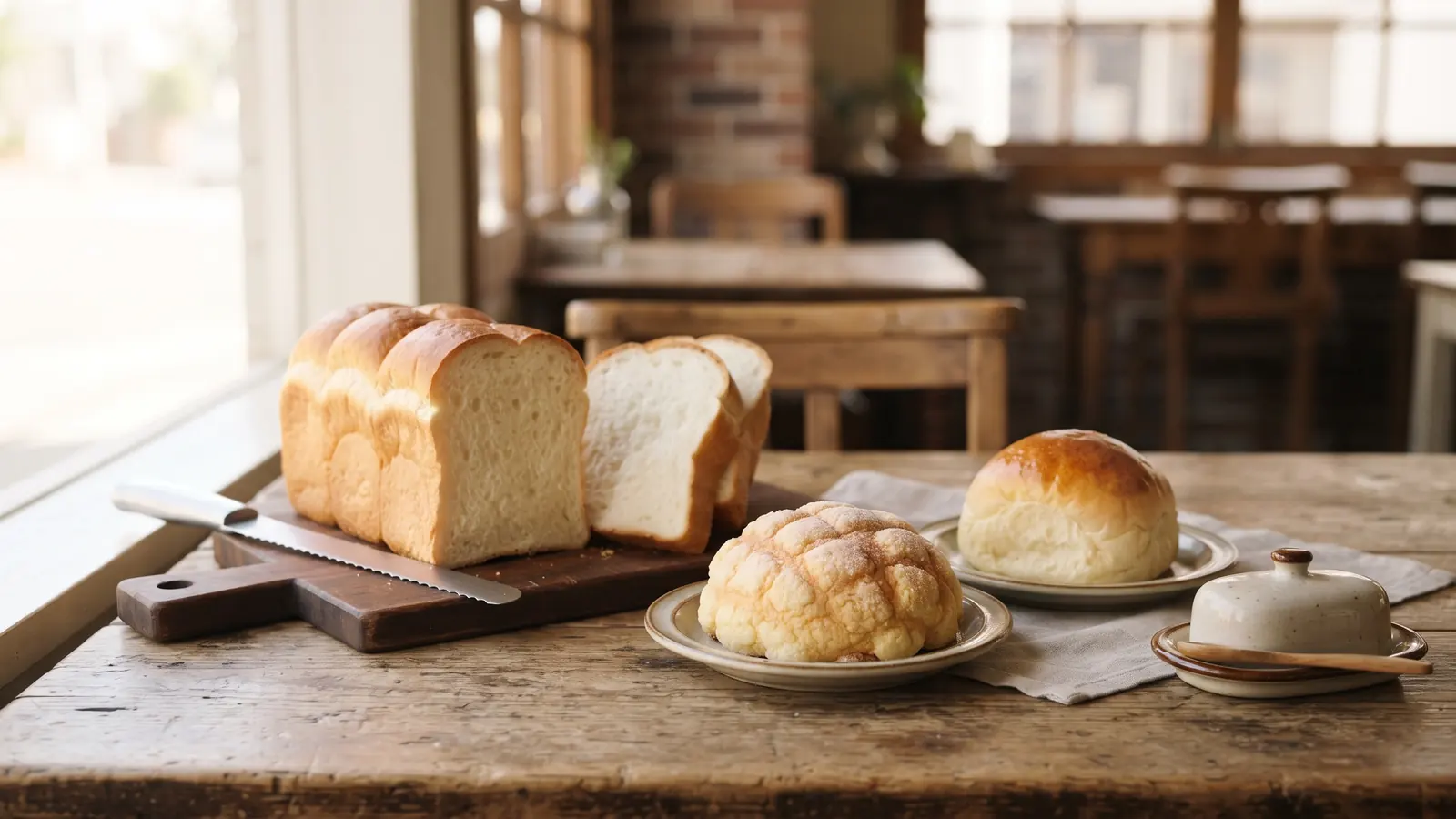
Milk bread is a soft, lightly sweet loaf or roll made from an enriched dough with milk, butter and sugar. Many versions add a cooked flour paste, which keeps the crumb moist, springy and fluffy for days.
Milk bread is a soft, lightly sweet bread made from an enriched dough of flour, milk, butter, sugar and yeast, and many bakers add a cooked flour paste so the crumb stays moist and fluffy. It is a staple of Japanese, Hong Kong and Filipino bakeries, and it is baked as loaves, rolls and buns.
What is milk bread?
Milk bread is an enriched yeast bread in which milk replaces most or all of the water, giving a creamy flavour, a tender crumb and a thin golden crust. Butter and a small amount of sugar are standard, and some recipes add an egg.
The term covers several regional breads rather than one fixed recipe. Japanese shokupan, Hong Kong-style soft loaves and Filipino pandesal rolls all sit in the same family, although each tradition shapes and sweetens the dough a little differently. Milk bread is also sold under names such as Hokkaido milk bread, which is a popular style of shokupan.
What makes milk bread soft and fluffy?
Milk bread is soft because fat and milk solids slow the formation of tough gluten, and because a cooked flour paste traps extra moisture inside the dough. The crumb comes out fine, springy and slightly stretchy.
The main contributors:
- Milk and butter, which shorten the gluten and add a creamy taste.
- A flour paste, either tangzhong (cooked with water or milk) or yudane (flour scalded with boiling water).
- Thorough kneading, which builds an even, strong network that holds air.
- A warm, unhurried proof, which lets the yeast aerate the dough fully.
What is the tangzhong method for milk bread?
Tangzhong is a roux-like paste of flour and liquid cooked until thick, then mixed into the dough, and it keeps milk bread soft for longer because the cooked starch holds water. The method is widely used for Asian-style soft breads and is the usual reason a milk bread loaf stays tender into the next day.
To make it, whisk a small portion of the recipe’s flour with water or milk over low heat until a thick paste forms, then cool it before adding it to the rest of the ingredients. The paste is often around five percent of the flour by weight, though recipes differ. Dedicated guides on the tangzhong method cover timing and temperature in more detail.
Milk bread vs white bread: what is the difference?
Milk bread differs from standard white bread in its enrichment: it contains milk, butter and sugar, which produce a softer, sweeter and more tender loaf than a lean water-based dough.
| Feature | Milk bread | Standard white bread |
|---|---|---|
| Liquid | Milk, sometimes with water | Mostly water |
| Fat | Butter | Often little or oil |
| Sweetness | Lightly sweet | Mostly neutral |
| Crumb | Fine, springy, feathery | Firmer, more even |
| Keeps soft | Longer, especially with a paste | Dries sooner |
Neither is better in every case. A lean white loaf suits strongly flavoured fillings, while milk bread is a better partner for butter, jam and sweet toppings.
Milk bread vs brioche: what is the difference?
Milk bread and brioche are both enriched breads, but brioche is far richer, with a large amount of butter and eggs and a cake-like, buttery crumb, while milk bread is lighter and springier. Brioche is French in origin, and milk bread traditions come mostly from East and Southeast Asia.
If both are toasted, brioche turns rich and slightly crumbly, and milk bread turns crisp outside and pillowy inside. The brioche guide in the same section covers that French loaf in full. Bakers sometimes blur the line, so ingredient lists matter more than the name on the label.
How do you eat milk bread?
The simplest way to eat milk bread is fresh or lightly toasted, with butter and a thin spread of jam or fruit preserves. The soft crumb also suits sandwiches, french toast and bread pudding.
Popular ways to serve it:
- Thick-cut toast with butter.
- Soft sandwiches with egg salad or cream and fruit.
- French toast, where the sturdy but tender crumb holds custard.
- Sweet rolls filled with cream or paste, such as the ube cream pandesal.
How do you make milk bread at home?
To make milk bread at home, cook a flour paste, mix it with flour, milk, sugar, yeast, salt and butter, knead until smooth, proof, shape, proof again and bake. The method is the same for loaves and rolls.
- Cook the flour paste and cool it.
- Mix the dough and knead until it passes the windowpane test, meaning a small piece stretches thin enough to see light through.
- Let it double in a covered bowl.
- Shape it into a loaf or rolls and proof until puffy.
- Bake until golden, around 30 to 35 minutes for a loaf in a moderate oven.
- Cool on a rack before slicing.
Heat and humidity change timing, so judge the dough by size and feel, not the clock alone.
What milk bread does Dua Bakehouse make?
Dua Bakehouse in Collingwood, Melbourne, lists two milk breads among its named items: shokupan, described as soft Japanese milk bread and served as thick slices with butter and preserves, and pandesal with ube cream, a Filipino milk bread roll filled with purple yam cream. Broadsheet and Concrete Playground mention both, and the bread is baked on site.
The menu page gives the full sample list read for this guide. No prices were published, so ask the cafe directly, and check the hours and location page before visiting, because weekend opening times differ between sources.
Why do different countries have their own milk breads?
Each region adapted soft, enriched dough to local ingredients and tastes. Japan favoured a square loaf and a fine crumb, the Philippines developed small soft rolls, and Hong Kong bakeries added sweet fillings and glazed tops. The shared base of milk, sugar and a long knead links them all.
Some details of origin are debated, and anyone reading about the tangzhong method will see it credited to different bakers and regions. What stays consistent is the texture: a soft, fluffy bread that stays tender longer than a lean loaf.
Common questions
Is milk bread made with milk instead of water?
Yes, milk replaces some or all of the water in the dough, and butter and sugar are added too. Milk gives a creamier flavour, a softer crumb and a golden crust compared with a water-based loaf.
Is milk bread the same as brioche?
No. Both are enriched, but brioche is much richer, with a lot of butter and eggs and a cakier crumb. Milk bread is lighter, with less fat, and has a springier, stretchier texture.
Why is my milk bread dense?
Common causes are under-kneading, too little proofing, old yeast or too much flour. Milk bread dough should be stretched thin without tearing before shaping, and it should double in size while proofing.
Can milk bread be made into rolls?
Yes. The same dough is shaped into small rolls, buns or a tray of pull-apart pieces. Rolls bake faster than a loaf, usually in about 15 to 20 minutes, depending on size and the oven.
How long does milk bread last?
Milk bread is best on the day it is baked and stays soft for two to three days in a sealed bag. Slice and freeze it for longer storage, then toast slices from frozen.
Everything practical is on the home page: Dua Bakehouse hours, menu and directions.
This article is general information from an independent guide, not from Dua Bakehouse itself. For the store’s current details see hours and location.